
Skip to content
Hostripples

HOSTRIPPLES DOMAINS

Domain Name Guide: Choosing, Registering and Moving

How to pick a domain name and extension, register it, move it from another registrar and manage DNS. .co.uk, .uk, .com and 500+ more, priced in pounds.

Explore solutions
4Solutions
DomainsCategory
One place

FIND YOUR FIT

All Domains Solutions

3 solutions to explore

Starting prices depend on the plan, billing term and availability. See each service page for full pricing and applicable taxes.

From First Search to Working DNS

The steps to owning a domain with us, with nothing hidden along the way.

One search, 500+ extensions

Type a name once and see whether it is free as a .co.uk, .uk, .com or hundreds of other extensions, with live prices in pounds before you get anywhere near checkout.
Search box checking a name across several domain extensions

Your domains in the same account as everything else

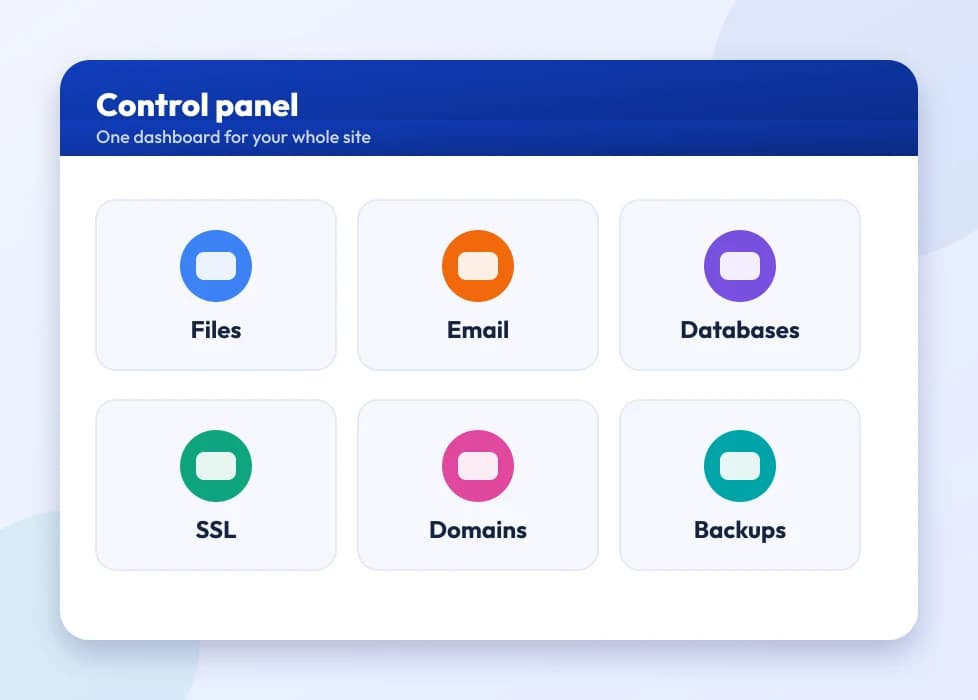
Edit DNS records, change nameservers, switch auto-renew on or off and manage WHOIS privacy from your Hostripples account, with no extra registrar login to keep track of.
Dashboard with tiles for DNS and domain settings

WHOIS privacy as standard

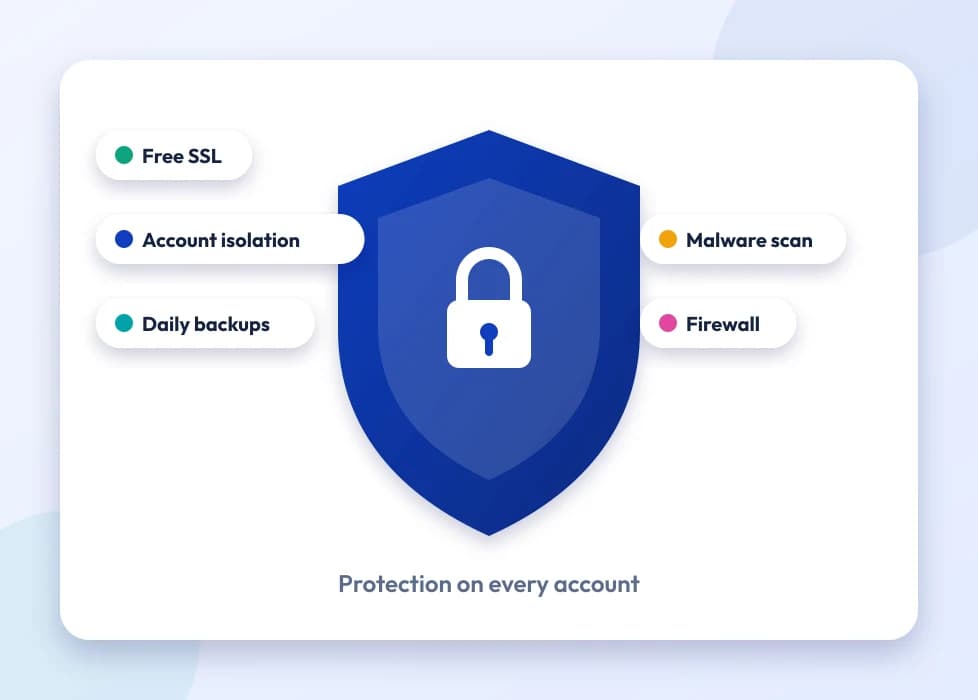
Your personal contact details stay off the public WHOIS record from the start. Some registrars charge extra for this; we include it.
Shield symbol for WHOIS privacy

People to ask when something gets stuck

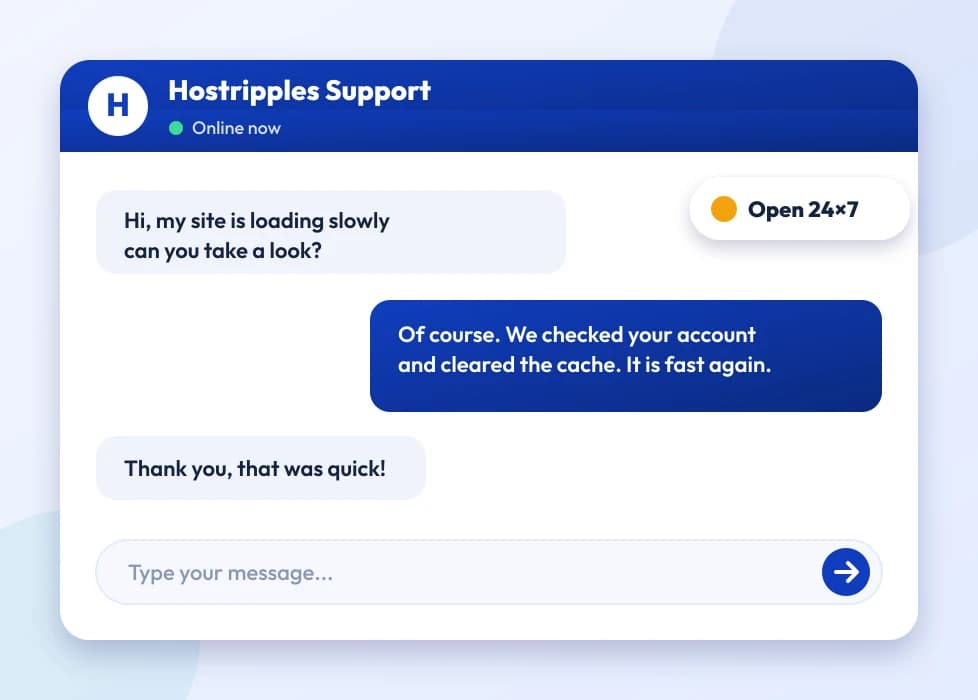
Our 24/7 support team helps with EPP code problems, DNS changes that seem slow to show up, or simply choosing between extensions before you buy.
Support chat window with an agent replying
You don't need any technical knowledge for this. Search, register or transfer, and the domain is in your account within minutes. The detail further down only matters once you are comparing extensions or deciding whether to move an existing name.

How to Choose and Register a Domain Name

Your domain is the part of your online presence that stays put. You can change host, rebuild the site or rebrand the design, and the address carries on working for as long as you keep renewing it. Registering a domain takes a few minutes: search for a name, check it is free, pay for the term you want and it is yours. The decisions worth taking time over are the name itself and the extension.

Picking a name

Short, easy to spell and easy to say out loud usually wins. Avoid hyphens and long runs of numbers, which people mistype or forget. Say the name to a friend and ask them to type it: if they get it wrong, so will your customers.

Picking an extension

For a business selling mainly to people in the UK, .co.uk is the familiar choice and tells visitors where you are based. .uk is the shorter version of the same country code, and .com remains the best-known extension worldwide. Many firms register the .co.uk and the .com together and point one at the other, so visitors who guess the wrong ending still find the right site.

Moving a domain you already own

If your current registrar is slow, hard to reach or expensive at renewal, you can move the name to us with the EPP code from your current provider. Your website and email keep working during the move. Check that your extension shows a transfer price on our domain transfer page before you start.

After you register

Every domain includes DNS management, so you can point it at your hosting, business email or any other service. Switch on auto-renew so the name does not lapse by accident. Prices are shown in pounds, renewal prices are shown before you buy, and Payment Gateway Processing Fees (4.96%) are added at checkout.

Who Uses These Domain Tools?

Four common situations, and the tool each one usually needs.

Not everyone buying a domain is starting from scratch. Some are naming a new business, others are tidying up after a registrar they no longer trust. Here is who tends to use which tool.

People starting their first business

Registering a first domain for a shop, a trade or a personal brand. Choosing the right name and extension now saves a costly rename later.

Agencies and freelance developers

Registering names for clients, often several in one go. Bulk Domain Search lets you check a whole list at once instead of searching one name per tab.

Shops getting ready to launch

A short, memorable name matters more for an online shop than almost anywhere else. Keeping the domain in the same account as your hosting means one login and one support team for both.

Anyone fed up with their registrar

If your registrar is slow, costly at renewal or hard to contact, Transfer Domain moves the name to Hostripples through the standard EPP code process without taking your site offline.

Got Questions?

Domain Name Questions

What to know before you settle on a name

No. The domain is the name, a bit like a street address. Hosting is the server space where your website's files sit. A working site needs both, but they are separate services and can come from different providers. Keeping both in one Hostripples account simply means one bill and one support team.
Almost straight away once payment clears; the name is yours within minutes. What can take longer is DNS propagation when you point the domain at a new host, which ranges from a few minutes to around 24 to 48 hours depending on the settings left by your previous provider.
Both are fine. A longer term of three to five years fixes the price for that period and gives you one less renewal to remember, which matters if a missed reminder could cost you the name. One year costs less up front and suits a business name you are still testing.
WHOIS is the public record of who holds a domain. Without privacy, details such as your name, phone number and email can be looked up by anyone and are regularly harvested by spammers. WHOIS privacy keeps your details out of that public record, and we include it with our domains rather than selling it as an extra.
Both work well. A .co.uk tells visitors straight away that you are a UK business, which can build trust with local customers, and good short names are sometimes easier to find. A .com is the most widely recognised extension around the world. If you trade mainly in the UK, a .co.uk is a perfectly professional choice by itself.
Yes, and plenty of businesses do. Use one as your main site and redirect the other to it, so anyone who types the other ending still reaches you rather than a parking page or someone else's site.
Most registries allow a short grace period after expiry when you can still renew at the usual price. After that comes a redemption period, when getting the name back costs much more, and then the name is released for anyone to register. We send reminders well ahead of the expiry date, but the safest option is to turn on auto-renew.
No. A transfer changes which registrar manages the domain, not where it points, so your DNS records, website and email keep working throughout. You start it with the EPP code from your current registrar. Check first that your extension shows a transfer price on our transfer page.
It is a unique code, sometimes called an auth code or transfer code, that proves you have the right to move the domain to another registrar. Your current registrar issues it, usually through their control panel or on request from their support team, and you need it to begin a transfer to us.
Registry rules commonly block transfers within 60 days of a domain first being registered, and many registrars will not move a name that is very close to its expiry date. If yours is nearly due, renewing with your current registrar first and transferring afterwards is usually the easier route.
When you are naming a new business, checking ten or twenty ideas one by one is slow and easy to lose track of. Bulk Domain Search checks the whole list together and shows the results side by side, which is how agencies and anyone brainstorming names tend to work.
Yes. You can add a hosting plan to the same order as your domain, or add one to your account later. Either way the domain and the hosting appear together in your client area, each with its own renewal date.
No. You can register a domain by itself and point it anywhere, including a host somewhere else. The domain is not tied to our hosting.
More than 500, from the everyday ones such as .co.uk, .uk, .com, .net and .org to newer extensions aimed at particular industries and uses. Availability is shown live as you search.
Both belong to the UK country code. .co.uk is the long-established version that most UK businesses already use, while .uk is the shorter form. Some businesses register both to protect their name. Both can be registered through our domain registration page.
No, .co.uk and .uk names can be registered by people and organisations outside the UK, as long as the contact details you give are accurate. If you have a question about a particular case, ask our support team before you order.
A lock stops anyone moving the domain to another registrar without your say-so. Domains are normally locked by default for security. If you ever want to move a name away, unlock it in your Hostripples account first.
Yes. Register or transfer the domain with us and set its DNS records to point at any hosting provider, mail service or CDN you like. Where the domain is registered and where it points are two separate things.
Nameservers tell the internet where to find the DNS records for your domain. You change them when you move DNS management to a different provider altogether. If you just want to point the domain at Hostripples hosting, editing individual records is usually simpler.
Yes. Every order creates an invoice in your client area, which you can download for your own records and accounts.
Yes, most extensions allow both, but hyphens and long strings of digits make a name harder to remember and type. For a real business a short name people can say and spell nearly always does better than a clever hyphenated one.
Nothing. The domain and the hosting are billed and managed separately. Without hosting your site stops loading, but you still own and control the domain until its own renewal date passes.
Not by itself; introductory first-year prices are common across the industry. The number to check is the renewal price, because that is what you will pay every year afterwards, and whether basics such as WHOIS privacy and DNS management cost extra.
You must give accurate registrant details when you register; that is a registry requirement. WHOIS privacy then keeps those details out of the public record, which is the kind of privacy most people are after.
An Internationalised Domain Name uses characters outside the basic Latin alphabet, such as accented letters or non-Latin scripts. Support depends on the extension, so ask our team if you have a particular name in mind.
Yes. Once the domain's DNS is managed with Hostripples, you can add a Business Email plan and have addresses such as you@yourbusiness.co.uk working within minutes of the MX records updating. See our Email overview for the plans.
Unlock it in your account, request the EPP code and give it to your new registrar to start the transfer: the same steps as moving a domain in, in reverse. We add nothing beyond the standard security checks every registrar uses.
Yes. A single domain can have subdomains such as shop.yourbusiness.co.uk or blog.yourbusiness.co.uk, each pointing at a different site or service, all under one registration. How many you can create depends on your hosting plan: 25 on our Starter cPanel plan and up to 1,000 on Enterprise.
You will need a different name or ending; trying .co.uk, .uk and .com often turns up an option when your first choice is gone. If someone is using a name that matches your trade mark to pass themselves off as you, that is a matter for a dispute process, such as UDRP for .com and Nominet's Dispute Resolution Service for .uk names, not something registration alone can fix.
Yes, and switching it on is the easiest way to avoid losing a domain to a missed renewal. Otherwise you are relying on noticing a reminder email once a year.
Yes. The .uk and .co.uk extensions are run by Nominet, the UK registry, which has its own rules and its own dispute service. Generic extensions such as .com, .net and .org follow the global ICANN rules wherever the owner is based.
If you are a consumer, domains are covered by the 14-day right to cancel like our other services, as set out in the Cancellation and Refund Policy. It still pays to check the spelling and extension carefully before you complete checkout, because a registered name cannot be changed, only replaced with a new registration.
Our support team, 24/7, for anything from a stuck transfer or a DNS record that will not update to which extension suits your business.
Yes. With auto-renew on and a valid payment method saved, the domain renews at the end of each term and you receive a receipt. You only need to step in if you want to change something.
These are premium domains: short, generic or very memorable names, such as single dictionary words, that registries or previous owners price well above normal registration because of demand. The higher price reflects the name, not a charge added by Hostripples.
Not really. Searching for a name or leaving it in your basket does not reserve it, and someone else can register it at any moment until you complete the purchase. Once you have decided, register it promptly.
A registry, such as Nominet for .uk or Verisign for .com, keeps the master database for an extension. A registrar, such as Hostripples, is authorised to sell and manage registrations in that database. Day to day you deal with the registrar, not the registry.
No, each can renew on its own cycle. Your account dashboard shows the renewal date for every item, so check it from time to time and nothing will lapse unexpectedly.
Yes. Each extension is registered separately, so yourbrand.co.uk and yourbrand.com could belong to two unrelated owners. That is why it pays to register the endings that matter to you before a competitor does.
The grace period is a short window just after expiry when you can still renew at the normal price. Once it ends, the domain moves into redemption, where reinstating it carries a much higher fee, and after that it is released to the public. Auto-renew means you never have to deal with either.
No registrar does this as part of registration. It is up to the person registering to make sure a name does not infringe someone else's trade mark before using it in business.
Up to 63 characters for the part before the extension, under the standard naming rules. In practice almost every workable business name is far shorter.
Yes. DNS management in your account lets you add, edit or delete A, MX, TXT, CNAME and other records, which is handy for routing email to another provider, verifying a service such as Google Search Console or setting up SPF and DKIM.
Use Bulk Domain Search to try several versions of a name across a few extensions at once. Seeing what is free across a shortlist makes the choice quicker than testing ideas one at a time.

Still have questions?

Our support team is available 24/7 by chat, ticket and email.

Chat with an Expert